Hi Guys,
Right in the link my recent lecture on Damage Control RESUS!!!!
Enjoy.......
Damage Control RESUS easy way
Tuesday, August 13, 2019

Tuesday, October 23, 2018
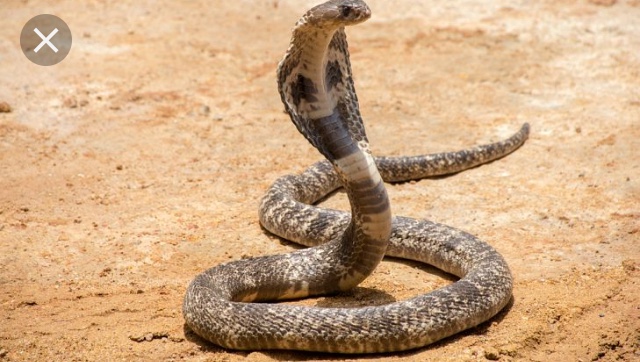
THE FXXXKIN VENOMOUS SNAKE

you are a doctor or medic going on expedition or remote site sooner or later you will have to cope with snake, venomous venomous, bites.
There are several species of snakes spread across the four continents
AFRICA AND MIDDLE EAST: Cobras, spitting cobras, vipers and asps
ASIA: Cobras, Russel s viper and Pit Viper
AUSTRALASIA: black snakes, tiger snakes
AMERICAS: coral snakes, rattlesnakes

PRESENTATION
- local pain, swelling, bruising, blistering on the site of bite
- regional linphnodes enlargement
Depending on snake:
- incoagulable blood and spontaneous systemic bleeding
- Hypotension to shock
- progressive generalized paralysis
- acute renal failure from rabdomiolisis

TREATMENT
- Remove rings and bracelets from the site affected before swalling
- clean wound and apply pressure-immobilization: perform a bandage such as for ankle sprains with a 10 cm wide bandage as long as possible and include a splint to immobilize the limb affected
- supportive therapy: cristalloids and colloids in case of shock and acute renal insufficiency
- assist ventilation in case of respiratory distress by respiratory muscles paralysis
- ANTIVENOM: SLOW IV INJECTION OF 4-5 VIALS DILUTED IN 500 ML OF NORMAL SALINE (usually antivenin is polyvalent for the most dangerous species of snake for a specific region.
I triede to do the stuff as simple as possible from yours docvpb that’s all
HAVE A NICE DAY ON THE
EDGE!!!!!

Tuesday, May 5, 2015
Welcome to the Fabulous World of Thoracic Traumas (Part. 1)
Hi Guys!!!!

Recently I realized something very strange: after attending, over the years, courses such as ATLS, ETC, PHTLS, PTC etc ... my mind became in such a way compartmentalized, schematized, excuse the term: protocollized; and if, on one hand this thing has been of great help giving me the cold blood to perform lifesaving maneuvers even in moments of extreme excitement and agitation, on the other hand in part made me lose flexibility in my way of thinking clinically, which in some cases could get me out of situations with no apparent way out.

Chest traumas for example:
when I think of a chest trauma my mind immediately set up
on ATLS scheme: life-threatening injuries that require immediate treatment:
pneumothorax, hemothorax, flail chest, Cardiac tamponade etc ... but the
problem is that my mind tends to consider these lesions as separate entities
!!!! ....What happens when all come together in the same patient ?? !!
Clinical case:
A military vehicle passes over a pressure
plate and triggers an Improvised Explosive Device (IED); aftermath is a big
explosion ... but well located: Endeed all the kinetic energy has been absorbed by anterior-left
section of the vehicle ... .and then indirectly has invested in full the driver only.

When Medevac Helo arrives the patient's conditions are already extremely critical;
At first
glance: Subject is conscious in extreme respiratory distress;
CatC.: no overt
external bleedings;
A: airway patent;
B: the problem is purely in the chest (a
very bad contusion)....In addition to a widespread bruising you notice multiple
rib fractures on the right with feeble paradoxical movements of the chest cage: thoracic excursions are very limited ;
at palpation: widespread crackles with great pain evoked: in short words, you do not discern where there is subcutaneous emphysema or a broken rib!!!!
Auscultation: absolutely of no use (for background noise);
saturation nearly 76% in O2 mask;
at palpation: widespread crackles with great pain evoked: in short words, you do not discern where there is subcutaneous emphysema or a broken rib!!!!
Auscultation: absolutely of no use (for background noise);
saturation nearly 76% in O2 mask;
C: FC. 120 bb / min.
NBP: 80/50 mmHg, One 14 Gauge IV access.
At this point mind of Medevac doctor is fully in ATLS
mode: the B is critical and requires action; Overt lesions are bilateral
PNX and Flail chest and he focuses on those; Thus Bilateral chest tube and RSI, followed by endotracheal intubation and
IPPV...
but the clinical situation seems to improve only slightly: the SatO2
goes up from 67% to 82%; the heart rate remains at 110 bb / min; NBP settles on
85 mmHg sys... Even if not copletely satisfied the doctor takes on board the
patient for transport but still feels that something is missing ... the mind at
this point goes for the tangent ... Head become a caldron of questions:
"the
B is complete; I treated all that was to be treated !!!",
" maybe I
missed internal bleedings?! but there are no signs of intraabdominal
haemorragies !! ",
" No fractures evident ",
" but why heart
rate doesn’t go down? "
... and so on ...Patient arrives at Role 2 hospital
alive....
.... but what wasn’t right ?? !!:
.... but what wasn’t right ?? !!:
A rib fragment had damaged the pericardium and was about to give cardiac
tamponade... if transport had lasted more than 10 min. perhaps the wounded would die...

At this point a big question arises: "Why doctor had not thought of that?"...
very easy: his mind was so schematically focused on more
obvious lesions to not be able to move with flexibility on the occult....
Bottom line: In certain situations such as those of extreme
urgency, although the schematic way of thinking, given to us by courses such as ATLS, is
often a necessary factor and essential to avoid falling into panic, however is
always better to keep mind trained to a minimum of flexibility just in attempt to
save the day even in these rare and complex clinical cases.
Just talking about
thoracic traumas give a glimpse on how many underlying lesions a blunt thoracic trauma can hide:
not one, not two, not three but we could say an entire Fabulous world of
chest injuries!!!!!
We start from the aforementioned life-threatening injuries:
1) Tension pneumothorax:
Most often a result of blunt thoracic trauma, the Tension PNX is
consequence of a progressive accumulation of pressurized air in the pleural
cavity with valve mechanism; air enters in the pleural space at each
inspiratory phase but cannot get out, is trapped during the expiratory phase;
The consequence of this mechanism is not only the complete collapse of the
affected lung but also the compression, by air accumulated, on mediastinum and its shifting and compression on
controlatheral Emithorax (thus on controlatheral lung and also vascular
structures).

Clinical features:
the patient will show respiratory distress but also
hypotension and tachycardia, due to the pressure exerted on great vessels and
then due to all the pathophysiological consequences resulting from a reduced
venous return to the heart.... could be also detected a reduced expansion
of involved Hemithorax and absent breath
sounds on auscultation (Mmmmhhh….try a little to auscultate a patient in an
outdoor setting or in a crowded ED... .Mmmmmmmhhh….);
to all this stuff add open or closed hemorrhagic lesions almost constantly present in this type of trauma and...... going back to my opening speech ....What a mess !!!!!
to all this stuff add open or closed hemorrhagic lesions almost constantly present in this type of trauma and...... going back to my opening speech ....What a mess !!!!!
Instrumental diagnosys:
Just two words: as soon as possible FAST US, FAST US, FAST
US and again FAST US ...
Treatment:
In prehospital setting the classic needle decompression can
really save the day;
There are specially crafted needles for this purpose ... ...
fast, easy and comfortable to use .... (Thanks to my friends US Army paramedics
to let me try those needles)....

.... unfortunately in Italy they are not available... .to us Italians if it's too easy we don’t like it right ???! So usually 14G needle in 2nd intercostal space on the midclavicular or better in 4th or 5th intercostal space lateral approach (I tried them both and I guarantee that the lateral positioning was successful in 98% of cases ... but it’s up to you!!!!).

More recently in the prehospital setting was introduced the so-called "Finger Thoracostomy" but I cannot express myself on this field not having tried it yet.

.... unfortunately in Italy they are not available... .to us Italians if it's too easy we don’t like it right ???! So usually 14G needle in 2nd intercostal space on the midclavicular or better in 4th or 5th intercostal space lateral approach (I tried them both and I guarantee that the lateral positioning was successful in 98% of cases ... but it’s up to you!!!!).

More recently in the prehospital setting was introduced the so-called "Finger Thoracostomy" but I cannot express myself on this field not having tried it yet.
Clearly the needle is only a bridge leading to the insertion
of the chest tube ... .a technique usually reserved for the ED ... .insertion
in 4th or 5th intercostal space midaxillary .... recommend use in adults at
least a 36F.
2) Open Pneumothorax:
A consequence of penetrating injuries of the chest and more
in particular a result in the vast majority of cases of gunshot wounds.
The primary cause is the establishment of a
pathophysiological link between the pleural space and outdoor environment with
loss of pressure balance in thoracic cavity.
In practice, the lung will tend to collapse during
inspiration and to expand slightly during expiration.
Clinical feature:
In severe cases, the wounded will be in respiratory distress
and you will see clearly the picture of “sucking chest wound”: very noisy
airflow mixed with blood (foam and bubbles ) going out from the lesion.
Treatment:
In prehospital
setting an Ashermann’s dressing (fairly widespread also in our country)

or the classic bandage closed on three sides can save the day.


or the classic bandage closed on three sides can save the day.

Obviously everything on hold for chest tube in ED.
However, keep in mind that when a bullet enter the chest will
demage all organs that meets on his way and then comes out ... if goes well!!!!
And again we go back to the initial speech ... .The open PNX will always
be in good company !!!!


... And for this post is all about ... to continue your journey into the terrifying world of thoracic traumas you will have to wait few days ... ..
from your docvpb
have a nice day on the Edge…..
References:
1. Rosen's Emergency Medicine
2. Roberts and Hedges' Clinical Procedures in Emergency Medicine, 6e (Roberts, Clinical Procedures in Emergency Medicine)
3. Tintinalli's Emergency Medicine: A Comprehensive Study Guide, Seventh Edition
4. Emergency War Surgery: The Survivalist's Medical Desk Reference
5. Trauma, Seventh Edition
6. Wilderness Medicine: Expert Consult Premium Edition - Enhanced Online Features and Print, 6e (Auerbach, Wilderness Medicine)
7. Special Operations Forces Medical Handbook
References:
1. Rosen's Emergency Medicine
2. Roberts and Hedges' Clinical Procedures in Emergency Medicine, 6e (Roberts, Clinical Procedures in Emergency Medicine)
3. Tintinalli's Emergency Medicine: A Comprehensive Study Guide, Seventh Edition
4. Emergency War Surgery: The Survivalist's Medical Desk Reference
5. Trauma, Seventh Edition
6. Wilderness Medicine: Expert Consult Premium Edition - Enhanced Online Features and Print, 6e (Auerbach, Wilderness Medicine)
7. Special Operations Forces Medical Handbook
Tuesday, April 28, 2015
Forward Surgical Team (FST); What means to be a War Doc....
Hi Guys!!!!
Have you ever wondered what would it means to work in a Battlefield Operating Room??!!
Check out this Awesome video....

Battlefield OR
Have you ever wondered what would it means to work in a Battlefield Operating Room??!!
Check out this Awesome video....
Battlefield OR
Thursday, April 16, 2015


Friday, February 6, 2015
Capnografia e Asma: accoppiata vincente?!
Hi Guys!!!!
My new post on EMpills....follow the link below!!!!....
Capnografia e Asma: accoppiata vincente?!

My new post on EMpills....follow the link below!!!!....
Capnografia e Asma: accoppiata vincente?!
Wednesday, December 31, 2014

Subscribe to:
Posts (Atom)